Which package suits your home?
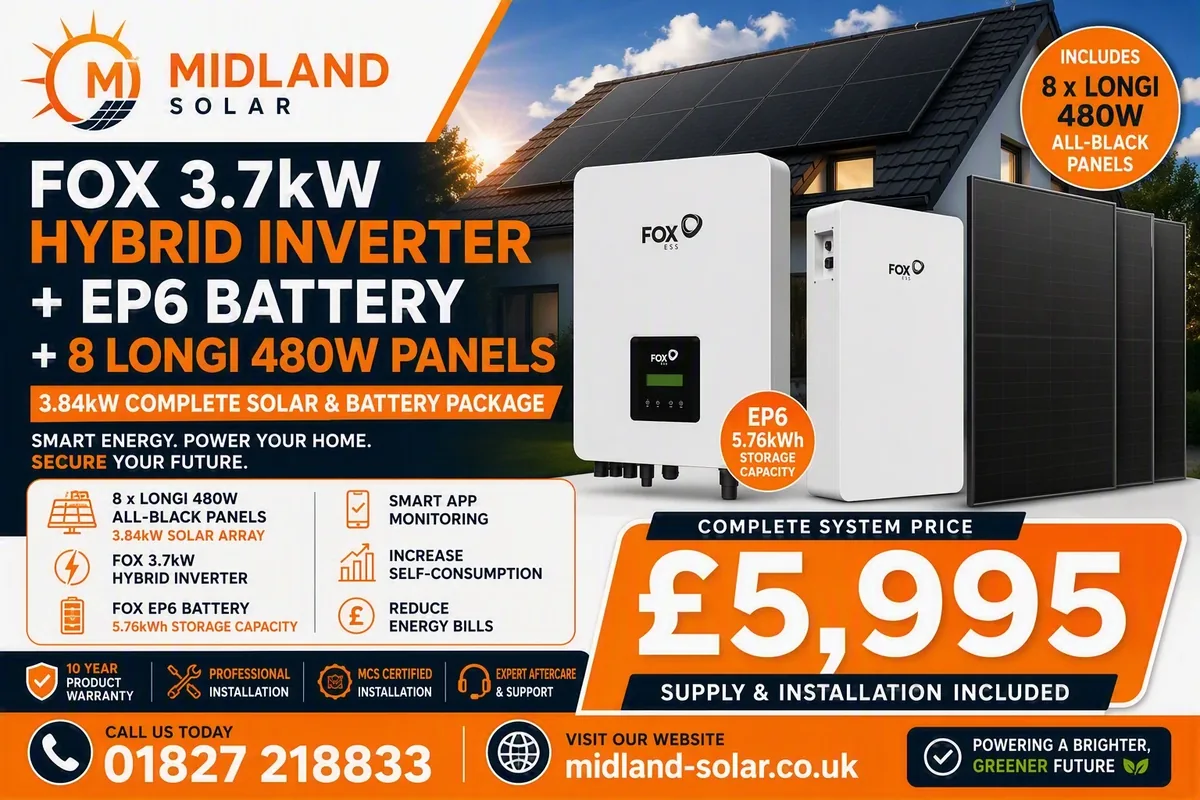
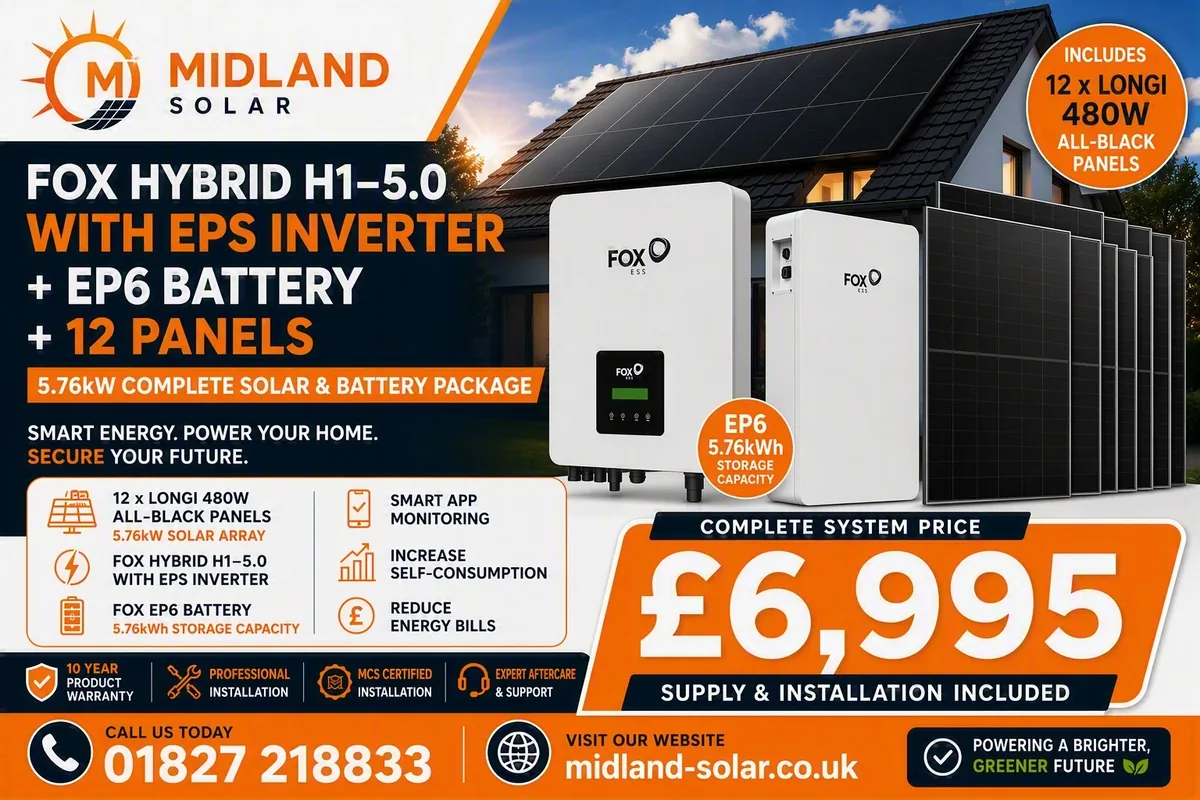
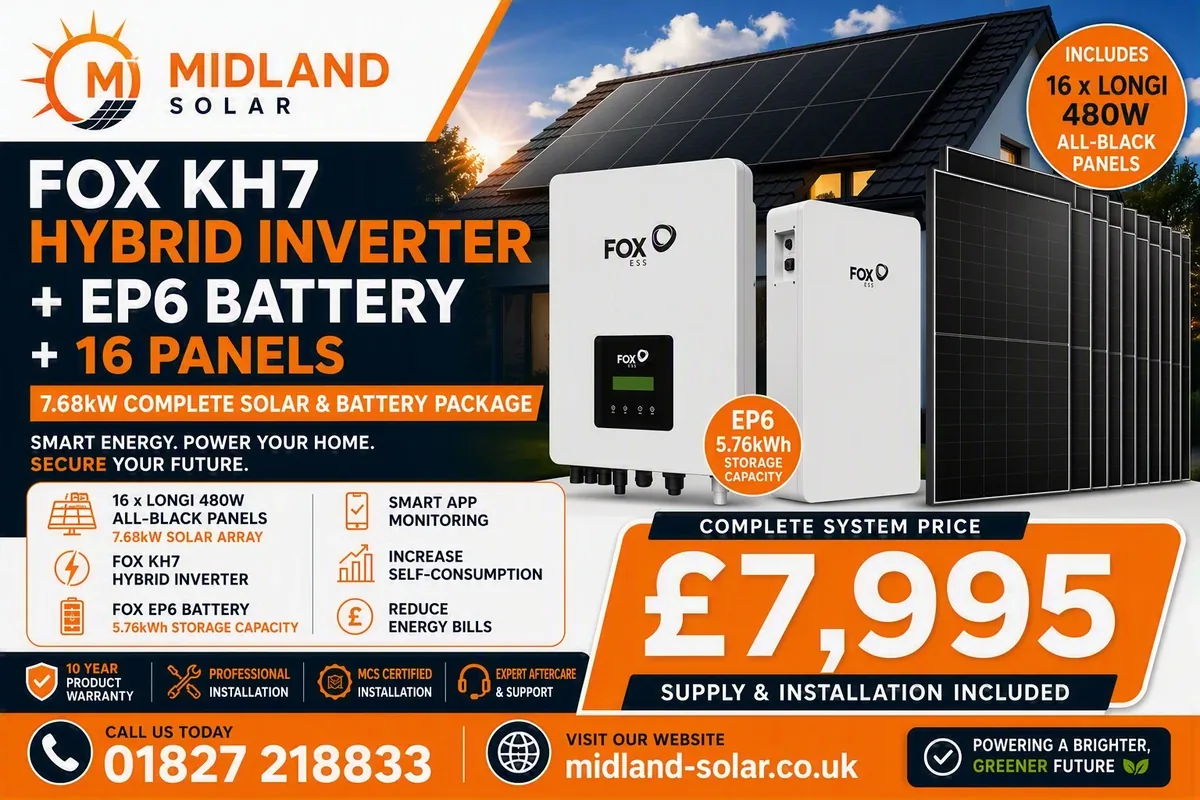
The honest answer is that roof space usually decides it before consumption does. A standard three-bed semi with one clear south or south-west facing elevation will typically take the 8-panel array comfortably. Larger detached properties, or homes with a long unbroken roof line, are usually where the 12 and 16-panel systems fit.
On consumption, a useful rule of thumb: if your annual electricity use is under about 3,500kWh, the 3.84kW package will cover a large share of your daytime demand and the EP6 battery will carry you through most evenings. Between 3,500 and 5,500kWh, the 5.76kW system is the better match. Above that — particularly if you charge an EV at home or run a heat pump — the 7.68kW package with the Fox ESS EP12 upgrade is the configuration that actually keeps up.
What you are getting for the money
LONGi 480W all-black panels. LONGi is one of the largest panel manufacturers in the world, and the all-black finish is the one most homeowners prefer on a visible elevation. At 480W each, you need fewer panels for the same output than the 400W modules that were standard a couple of years ago — which is part of why these packages fit on a single elevation.
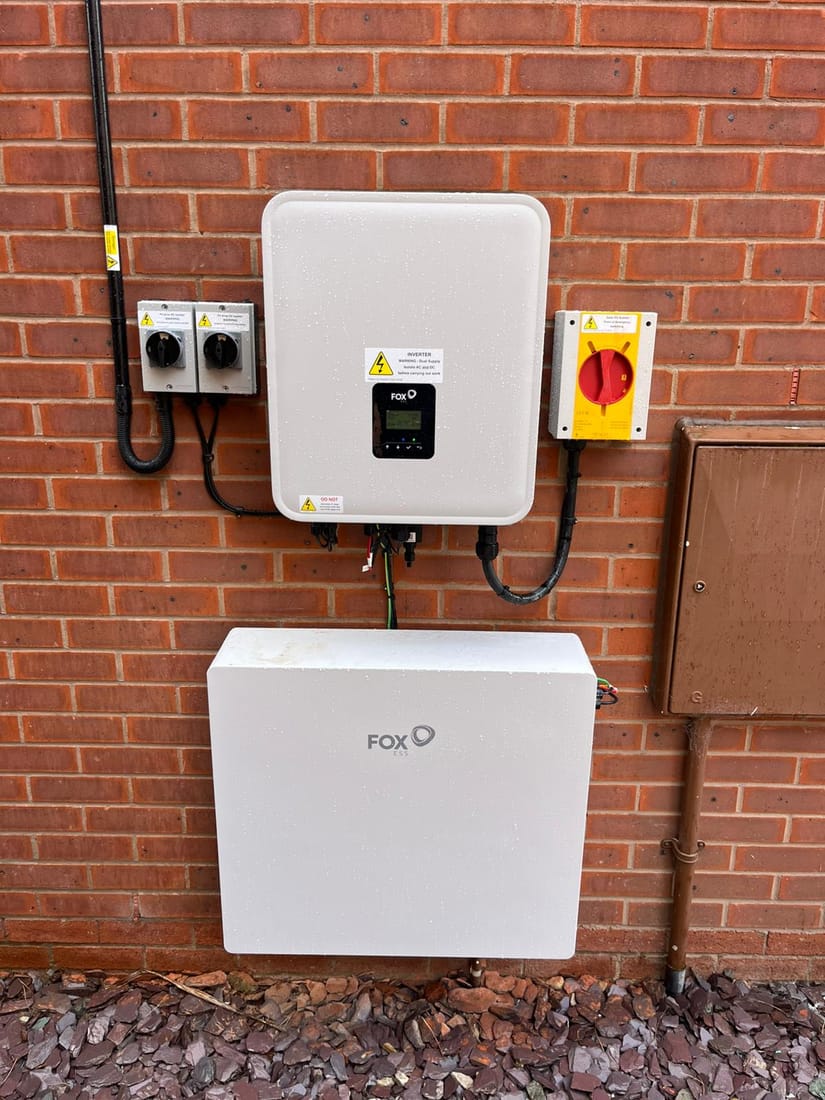
Fox ESS hybrid inverter. A hybrid inverter handles both the solar array and the battery in one unit. That matters practically: one piece of kit to fault-find, one warranty, one app, and no second inverter to buy if you add storage later. The 3.84kW package uses the 3.68kW unit, which is the largest single-phase inverter that can be connected under G98 without prior DNO approval — so there is no waiting on a network application before we can book your installation.
Fox ESS EP6 battery — 5.76kWh. Storage is what turns solar from a daytime-only benefit into something that covers your evening. Without a battery, a typical household exports well over half of what it generates and buys it back later at four or five times the export rate.
What happens after you enquire
We book a free survey — a proper look at the roof, the loft, your consumer unit and your recent bills. That visit confirms whether your roof takes the package as priced, and if it does not, we tell you what the difference would be before you commit to anything. You get the final price in writing. Nothing is booked until you have accepted it.
Installation is normally one to two days on site once scaffolding is up. We handle the DNO notification and issue your MCS certificate afterwards, which is what makes you eligible to apply for Smart Export Guarantee payments on everything you export. If you would rather spread the cost, our finance options apply to these packages in the normal way.
Frequently asked questions
How much does a solar and battery system cost in the UK?
Most 2026 price guides put a typical 4kW solar installation with a battery at roughly £8,000 to £13,000 fully installed; battery capacity drives most of that spread. The range is broad because most of the market prices per job — you only learn your number after a sales visit. That's the guesswork a published package price removes: the figures on this page are the price, confirmed in writing once a free survey has checked your roof suits the system.
What does Martin Lewis say about solar panels?
Martin Lewis's MoneySavingExpert is cautiously positive. Its solar guide (updated September 2026) says panels can pay for themselves for households who stay put — break-even is typically around ten years, faster the more of the generated power you use at home rather than export. On batteries, MSE weighs the extra upfront cost against storing daytime power for evening use instead of exporting it cheaply. Its standing advice is to get several quotes from MCS-certified installers. We'd add: make every quote itemise the checklist above, so you're comparing complete installations, not boxes of hardware.
What is actually included in the package price?
Everything needed to get the system generating: the panels, mounting system, hybrid inverter, Fox ESS EP6 battery, all electrical work, the cost of scaffolding to one elevation, DNO notification, MCS certification and handover. There is no separate design fee, survey fee or commissioning charge.
Why does the price depend on panels going on one roof?
Splitting an array across two or more elevations means extra scaffolding, longer cable runs, and in most cases additional inverter inputs or optimisers. The package prices are built around a single-elevation layout. If your roof needs a split array we will still quote it — it just falls outside these fixed prices, and we will tell you the difference before you commit.
What if I need scaffolding on more than one elevation?
Each additional elevation is quoted separately after the survey. We price it at cost plus our standard access charge and show it as a separate line, so you can see exactly what the extra is buying.
Is VAT included in these prices?
Yes. Domestic solar panel and battery storage installations are zero-rated for VAT until 31 March 2027, so the price you see is the price you pay.
How much will a package like this generate?
Across the Midlands a well-oriented array generates roughly 850–1,000kWh per kWp installed each year. That puts the 3.84kW package at approximately 3,200–3,800kWh a year and the 7.68kW package at roughly 6,500–7,700kWh, depending on roof pitch, orientation and shading. Your survey will give you a figure calculated for your actual roof rather than an average.
Should I upgrade to the EP12 battery?
The Fox ESS EP12 doubles storage to 11.52kWh for £995. It earns its money back fastest if you run an electric vehicle, have a heat pump, or are out during the day and want to shift more of your generation into the evening peak. On a low-consumption household the standard EP6 is usually the better value.
Can I still get finance on a package deal?
Yes — the package prices work with our normal finance options, subject to status. See our finance page for the current rates and terms.
How long does installation take?
Most package installations are completed in one to two days on site once scaffolding is up. We handle the DNO notification and issue your MCS certificate afterwards, which is what makes you eligible for Smart Export Guarantee payments.